
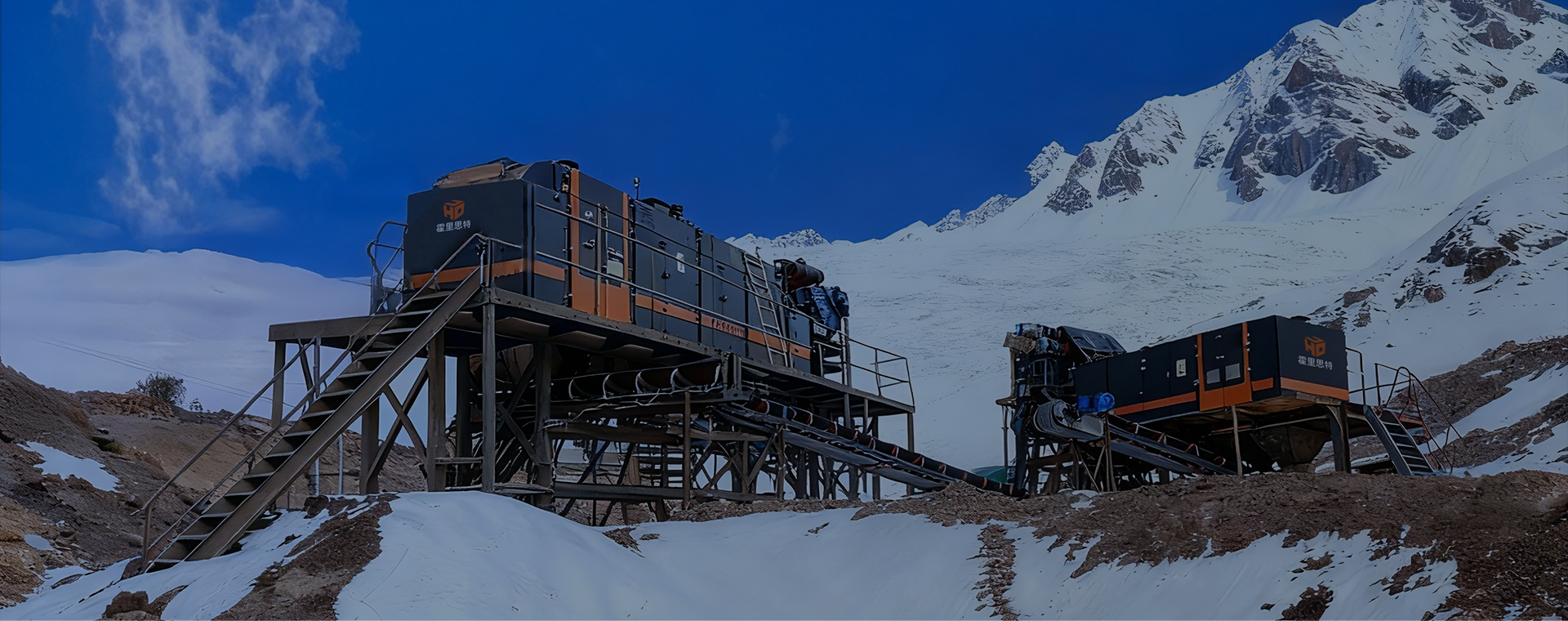
Ведущий поставщик интеллектуальных решений для сепарации полезных ископаемых

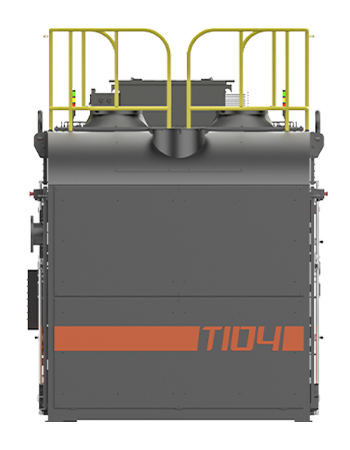
Ленточный интеллектуальный сепаратор 104 работает на основе рентгеновской трансмиссионной технологии. Он может интегрировать другие спектральные методы для многомерного определения внутренней структуры и химического состава минералов. Благодаря алгоритмам искусственного интеллекта и высокоскоростной системе разделения обеспечивается высокоточная сортировка сырья.

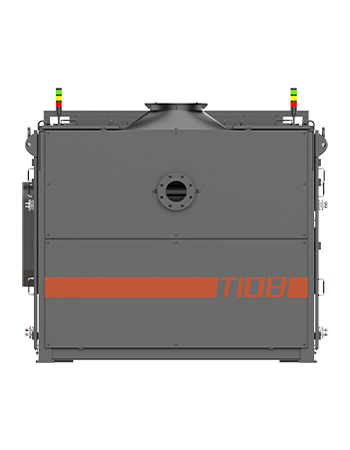
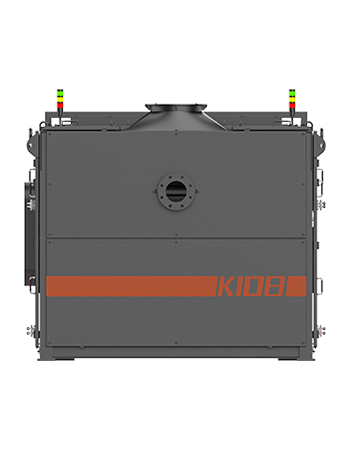
Интеллектуальный сепаратор 108 с горизонтальной подачей работает по принципу рентгеновской трансмиссии. После распределения сырья на короткой ленте минералы проходят сбор данных, интеллектуальное распознавание и разделение в процессе свободного падения. Весь технологический процесс исключает механический контакт с материалом, снижает износ оборудования и повышает стабильность сортировки.

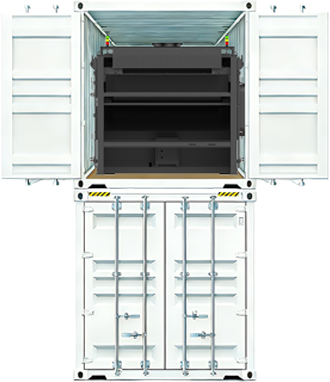
Мобильная интеллектуальная сортировочная система 114 представляет собой контейнерное передвижное решение. Благодаря уникальной интегрированной и модульной конструкции она отличается компактными размерами, быстрым монтажом и демонтажом, а также высокой мобильностью.
Единственный в мире производитель сортировочных машин, который самостоятельно разрабатывает и производит рентгеновские детекторы.
Фактическая рабочая мощность аппаратуры является минимальной по стране, что гарантирует максимальную безопасность и низкие эксплуатационные расходы.
Реальная рабочая скорость транспортной ленты — самая высокая в отрасли:
3,2 м/с для угольной промышленности, 3,6 м/с для нерудных полезных ископаемых, с перспективой увеличения до 4 м/с.
Глубокое освоение и одновременное применение одноэнергетных и двухэнергетных интеллектуальных алгоритмов.
Трёхмерное определение центра масс для корректной продувки, что обеспечивает более точное разделение по сравнению с традиционной двухмерной технологией.
Защита от воды, грязи, пыли и взрывозащищённое исполнение.
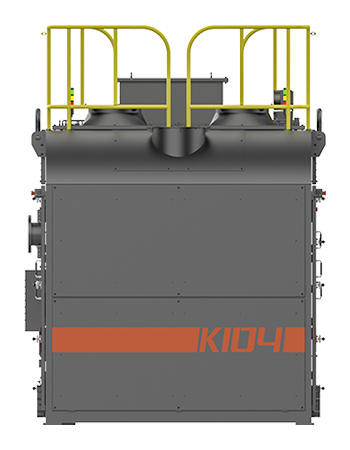
Our products include Model 104 (belt type), Model 108 (horizontal projectile type), Model 109 (free-fall type), and Model 114 (mobile type). Among them, the T Series is intelligent dry separators for coal, and the K Series is intelligent sorters for mining.
Our after-sales service covers full-process support including equipment commissioning, maintenance, troubleshooting, and operation training. During on-site commissioning, we will adjust the equipment to optimal operating conditions based on on-site working conditions and requirements. Meanwhile, systematic professional training will be provided to help customers operate proficiently and master daily maintenance skills. In case of equipment abnormalities, we will respond rapidly through our localized service network to solve problems in a timely manner and ensure continuous and stable operation of the equipment.
Our after-sales department boasts a professional team with extensive experience, consisting of senior, intermediate and junior engineers as well as after-sales support personnel, enabling us to provide customers with multi-level and high-efficiency technical services. In addition, relying on seven offices located across the country and numerous spare parts warehouses, we have established a rapidly responsive local service network. Whenever and wherever on-site support is required, we provide round-the-clock quick response and can arrive on site to resolve issues at the earliest opportunity based on actual conditions and customer needs.
Our standard production lead time for equipment is 3 months. We feature a comprehensive after-sales support system with efficient response: relying on a dedicated after-sales hotline and intelligent monitoring platform, we provide prompt response services, remote fault diagnosis and corresponding solutions, and achieve same-day closure for general faults. Professional maintenance stations and spare parts warehouses are set up in regions with intensive equipment application, ensuring that technicians can arrive on-site within 24–48 hours for routine faults, while arrangements for remote areas are made according to traffic conditions. Meanwhile, the equipment is equipped with a built-in online monitoring system that supports remote parameter adjustment, fault early warning and online repair, minimizing equipment downtime to the greatest extent.
For the sorting of conventional coal types in coal mines, X-ray identification technology enables accurate and efficient mineral discrimination. For special ores with complex compositions and indistinct physical properties, a multi-dimensional identification system can be established by combining X-ray with multispectral technologies such as visible light, so as to ensure sorting accuracy and stability.
Two core prerequisites must be met for the kaolin recovery project from coal gangue sorting: First, the basic kaolin content in raw coal gangue shall be no less than 15%, which is the minimum threshold for the project to be economically viable. Second, the grade of kaolin shall be tested by analyzing key indicators including aluminum-silicon ratio, whiteness, and loss on ignition to evaluate its commercial value. The conventional sorting process flow is as follows: Raw coal gangue → Screening (classification) → Intelligent dry separator (AI recognition and sorting) → Kaolin concentrate. Under normal operating conditions, the intelligent dry separation stage can achieve a kaolin concentrate purity of over 90% and a recovery rate of over 90%. Specific values depend on raw material quality and equipment parameters.
First of all, it is necessary to obtain the raw coal screening data to clarify the proportion of the particle size range to be fed. Secondly, the shift system parameters of the coal preparation plant or coal mine must be obtained, based on which the hourly processing capacity of the equipment can be calculated, and then the required number of equipment units can be determined.
Our T104 intelligent dry separator has obtained complete coal mine safety certification (MA certification) and explosion-proof qualification certificates. Relevant qualification documents are complete and compliant. The equipment has been successfully applied to underground raw coal sorting scenarios with stable and reliable operation.
Extensive field applications have verified that for mainstream coal types such as lignite, bituminous coal and anthracite, the equipment achieves an overall recognition accuracy of 97%–99%. The gangue rejection rate is generally higher than 93%, and the coal loss in gangue can be controlled within 3%. It should be noted that sorting accuracy is closely related to coal properties and feed particle size parameters. If the feed particle size exceeds the designed range of the equipment, sorting accuracy will decrease directly.
Compared with wet coal preparation processes such as movable screen jigging and dense medium separation, the large piece dry separator offers five core advantages: 1. Outstanding cost advantages The cost per ton of coal is less than 1/5 that of wet processing. When used as a pretreatment stage for wet separation, the gangue rejection rate exceeds 90%, greatly reducing the volume of material requiring washing. Taking a 3 million ton coal preparation plant as an example, annual savings on washing costs exceed 18 million yuan. 2. Strong environmental performance and resource adaptability Dry separation achieves zero water consumption and zero wastewater discharge, making it suitable for water scarce and remote mining areas. It also avoids the challenges of slime water treatment, supporting the development of green mines. 3. Superior separation efficiency and accuracy Supported by dual technologies of X ray and image recognition, the coal loss in gangue is controlled within 2%, 9 percentage points lower than that of movable screen jigs, and gangue rejection efficiency is improved by more than 40%. At the same time, it stably increases the calorific value of clean coal by 200–300 kcal/kg, reduces ash content and enhances product value. 4. Easier investment, installation and operation & maintenance The equipment features a simple structure, small footprint and flexible layout. For new construction or renovation projects, civil engineering and installation costs are low and the construction cycle is short. Core components boast high reliability, and daily maintenance requires no specialized team, making O&M far less difficult than the complex medium circulation systems used in wet processes. 5. Significant quality improvement and revenue growth Precise gangue rejection reduces coal loss and raises clean coal yield. Combined with savings on labor and processing costs, this significantly shortens the investment payback period. For some projects, annual revenue increases reach the ten million yuan level.
The comprehensive cost per ton of coal for this intelligent dry separation system can be controlled within 5 yuan, significantly lower than that of traditional wet coal preparation (30–40 yuan/ton) and manual sorting. Its core operating cost mainly consists of electricity expense, with power consumption of only 1.19–2 kWh per ton of processed material, far lower than that of wet coal preparation. Adopting an intelligent mode of “unmanned operation with on-site inspection”, a single unit can save over 350,000 yuan in labor costs annually. Wearing parts such as wear-resistant liners and conveyor belts feature long replacement cycles and low unit prices, resulting in controllable long-term maintenance costs. Daily maintenance is simple and requires no professional team, and the manufacturer provides timely spare parts supply, further reducing additional expenses.
The core application scenarios of this intelligent dry separation system cover various coal mine production requirements: It is suitable for large mines with an annual output of 1.2 million tons or more and a lump coal ratio of ≥30%. It can sort and discard lump gangue in advance, reducing the load on subsequent crushing and washing systems and minimizing equipment wear. In response to the characteristics of open-pit mines—high lump coal content and sufficient site space—installing large-scale lump dry separators can realize in-situ quality upgrading of raw coal, greatly reducing outward transportation costs. Adopting a dry separation process that requires no water resources, it can replace traditional wet separation for lump coal treatment. It is perfectly suitable for coal mines in water-scarce or remote areas, breaking geographical restrictions while meeting zero-discharge environmental protection requirements. To address the insufficient lump coal handling capacity of old coal preparation plants, adding this system as a pretreatment link can rapidly improve the overall production capacity, with a short renovation cycle and controllable investment. It is also equipped with underground special models that meet explosion-proof standards, which can be directly installed near mining faces to realize in-situ gangue discharge, reduce shaft hoisting volume, and lower energy consumption of the mine hoisting system.
Our T104 intelligent dry coal separation system is mainly designed for sorting lump raw coal of 50–300 mm, at which size range the equipment achieves optimal processing efficiency and accuracy. It is not currently suitable for ultra-fine particles and fine coal. The upgraded TF104 composite separator has a maximum processing size of up to 1000 mm, making it suitable for screening plants and coal preparation plants. It eliminates the need for secondary crushing, significantly saving workshop space and equipment investment. Note: The sorting size range of the equipment must be accurately matched with the actual particle size distribution of screened raw coal at the mine. If the feed particle size exceeds the designed range of the equipment, sorting accuracy will decrease directly. Customers are recommended to select the appropriate model based on their raw coal production capacity and particle size characteristics.